
Mapping Variance Layers: Adjusting Staking Depths When Football Fixtures Collide With Racing Schedules
Football fixtures and horse racing events frequently overlap during peak periods, creating situations where bettors must map variance layers to determine appropriate staking depths across multiple markets. Data from industry reports indicates that these collisions increase the complexity of bankroll allocation because each sport carries distinct volatility profiles that interact when schedules align. Observers note that August 2026 will see several Premier League opening weekends coincide with major flat racing festivals, producing simultaneous high-volume betting opportunities on pitches and tracks.
Defining Variance Layers in Cross-Sport Contexts
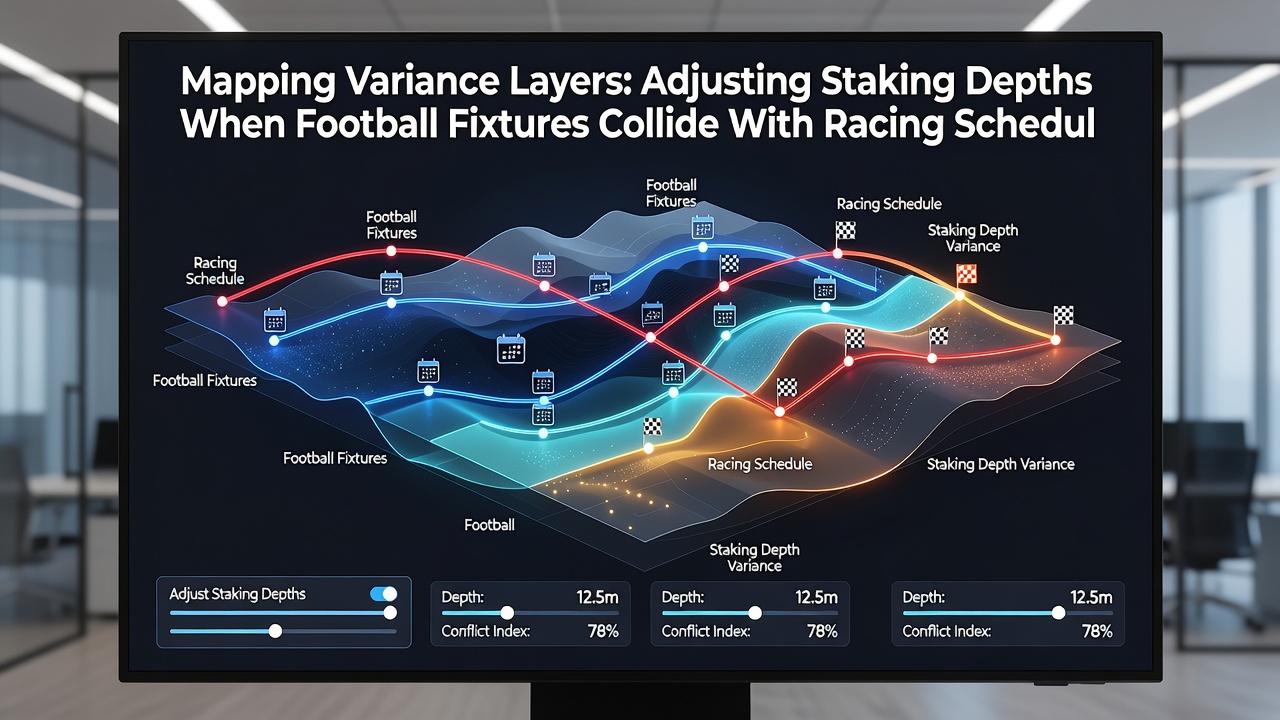
Variance layers represent the differing degrees of outcome unpredictability between football matches and horse races, with researchers identifying three primary strata that affect staking decisions. The first layer covers low-variance football results such as heavy favorites in domestic leagues, while the second encompasses medium-variance horse racing outcomes influenced by track conditions and pace scenarios. The third layer combines high-variance accumulators that draw from both sports when fixtures collide, and experts have observed that these combined positions require deeper analysis of correlation risks before stake sizes are finalized.
Studies published in academic journals demonstrate that bettors who ignore layered variance during overlap periods experience greater drawdown sequences than those who adjust positions methodically. Figures reveal that average staking reductions of 15 to 25 percent occur when football and racing markets run concurrently, because the combined standard deviation rises beyond levels seen in isolated sports.
August 2026 Schedule Overlaps and Their Impact
In August 2026 the English football season begins alongside several high-profile racing meetings, including events at Ascot and York that attract substantial turnover. Records show these calendar alignments generate elevated betting volumes across both sectors, with live markets on early-season football matches running parallel to ante-post and in-running horse racing wagers. Those who have examined historical patterns note that such overlaps amplify variance because weather disruptions at racecourses can coincide with unexpected team news from football grounds, producing rapid line movements that affect multiple positions simultaneously.
Mapping Process for Overlapping Events
Bettors map variance layers by first cataloging all active fixtures within a 48-hour window, then assigning each market a volatility score based on historical data and current conditions. Next they calculate the aggregate variance across selected bets, adjusting individual stake depths so that no single layer exceeds predetermined bankroll thresholds. This sequential approach allows positions to remain balanced even when one sport experiences higher than expected swings.
Practical Adjustments to Staking Depths
Once variance layers are mapped, staking depths are scaled according to the combined risk profile rather than isolated event probabilities. For instance, a low-variance football accumulator might receive a standard unit size, whereas a medium-variance racing exacta placed on the same day would receive a reduced allocation to keep overall portfolio volatility within acceptable bounds. Data indicates that this proportional scaling prevents excessive exposure during periods when multiple high-stakes events occur within hours of each other.
Case examples from professional betting syndicates illustrate that teams maintaining detailed variance matrices reduce average loss streaks by reallocating stakes before overlaps intensify. Those matrices incorporate real-time inputs such as team injury reports and track bias updates, allowing dynamic stake modifications that static models cannot achieve. Researchers have found that syndicates employing such systems sustain longer positive expectancy periods compared with operators who apply uniform staking across colliding schedules.
Supporting Research and Regulatory Context
According to a report from the Nevada Gaming Control Board, cross-sport betting volumes have risen steadily in jurisdictions that permit simultaneous football and racing wagers, prompting operators to develop variance-aware staking tools. Research published in the Journal of Gambling Studies further shows that structured variance mapping correlates with improved capital preservation metrics across multi-event portfolios. These findings align with observations that August schedule collisions require bettors to treat staking depth as a dynamic variable rather than a fixed parameter.
Conclusion
Mapping variance layers provides a structured framework for adjusting staking depths when football fixtures collide with racing schedules, and data from multiple sources confirms that systematic application of these methods supports more stable bankroll trajectories. As August 2026 approaches, participants tracking overlapping calendars will continue to refine these techniques using updated fixture data and volatility metrics.