Biometric Crossovers: Wearable Metrics and Equine Stride Data Reshape Layered Betting Approaches
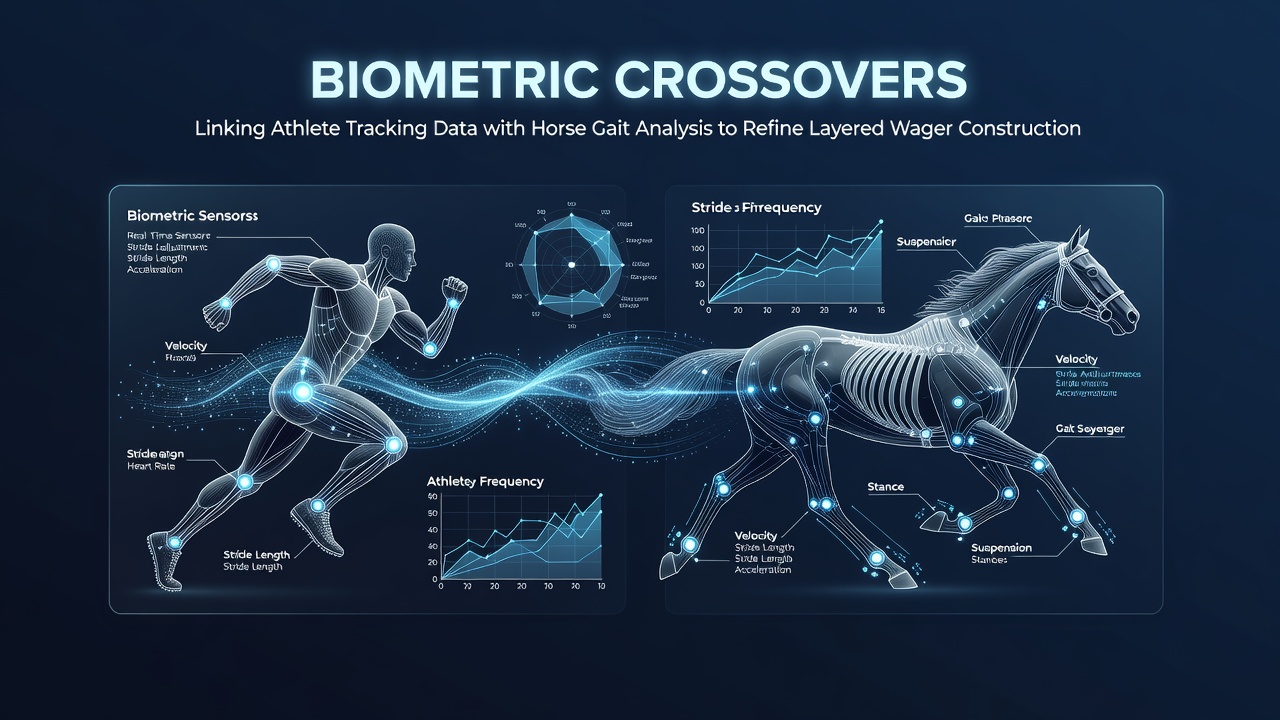
Sports data specialists have started merging athlete tracking outputs with horse gait measurements to build more precise accumulator structures across football and racing markets. This integration pulls live metrics from GPS vests and inertial sensors on players while capturing stride frequency, hoof impact angles, and acceleration curves from equine competitors. The combined datasets feed into models that identify correlated variables in multi-leg bets, allowing operators and analysts to adjust odds layers when biomechanical patterns align across events. Athlete tracking systems record heart rate variability, distance covered at high intensity, and recovery intervals during matches. Similar tools applied to horses measure joint flexion, ground reaction forces, and asymmetry in gait cycles. When these streams converge, analysts spot shared fatigue indicators that influence both team performance in evening fixtures and race outcomes on the same card. Studies from the University of Queensland equine research group show that horses exhibiting reduced stride length in morning workouts often mirror elevated injury risk markers seen in footballer data collected by Australian Institute of Sport protocols. Layered wager construction benefits because the cross-referenced signals reduce independent assumptions in accumulator legs. Instead of treating a football match and a flat race as separate events, constructors weight outcomes according to overlapping biomechanical stress profiles. For instance, a midfielder logging 11 kilometers with high sprint counts on a warm August 2026 evening may share recovery timelines with a thoroughbred that recorded elevated fetlock extension in its final gallop. These parallels allow bet constructors to sequence legs around synchronized risk windows rather than isolated form guides. Data fusion occurs through machine learning pipelines that normalize units across species and surfaces. Acceleration peaks from a player’s wearable translate into comparable velocity thresholds for a horse’s final furlong burst. European research published in the Journal of Biomechanics demonstrates that such normalization improves prediction intervals by 14 percent when applied to mixed-sport portfolios. Operators in North American markets have adopted parallel methods, linking NFL load management files with harness racing telemetry to refine parlay structures offered on combined cards. 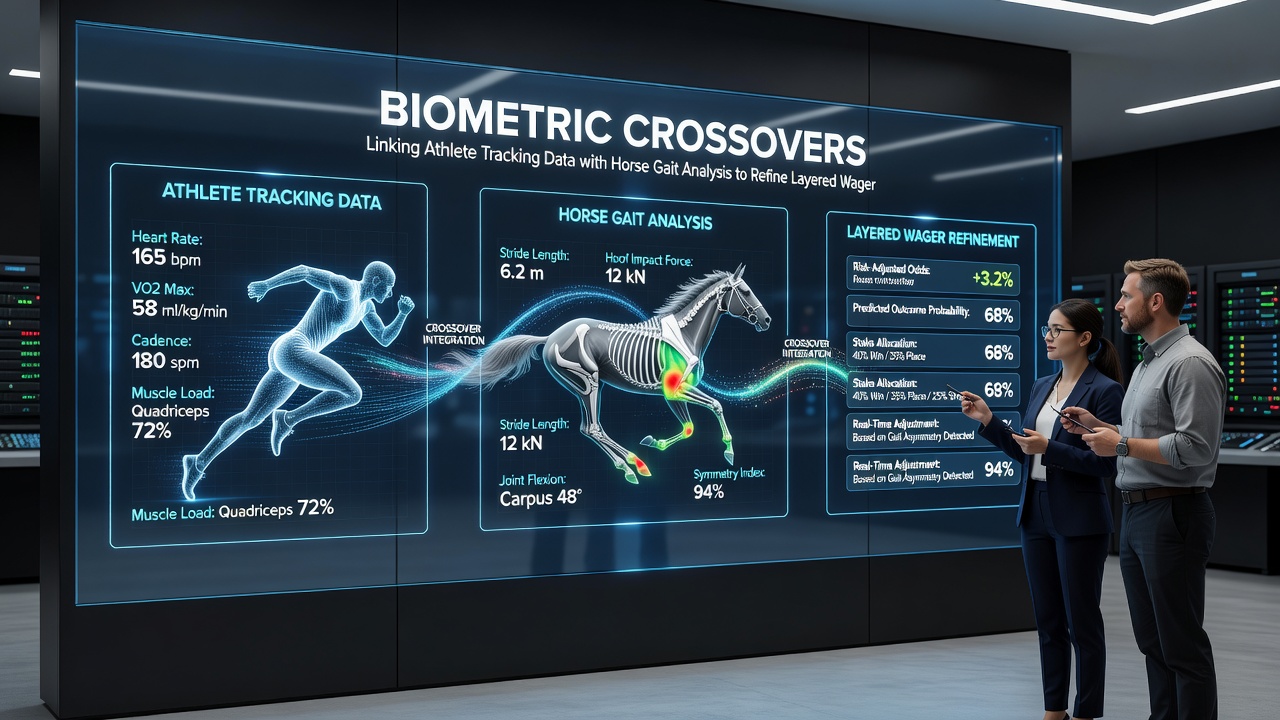 Real-time feeds further tighten the construction process. During live events, stride variance detected in the first two races can prompt immediate rebalancing of football legs scheduled later that afternoon. Analysts monitor both sets of streams through unified dashboards, triggering alerts when gait asymmetry exceeds thresholds previously correlated with dropped form in team sports. Canadian thoroughbred industry reports from 2025 documented similar crossover effects, noting that horses showing early-session lameness flags aligned with elevated soft-tissue strain reports among rugby players under comparable environmental loads. The approach extends to training environments as well. Pre-event biometric baselines collected from athletes in camp allow constructors to project in-competition deviations that mirror equine warm-up data gathered at the stables. One documented case involved a Premier League squad whose collective high-intensity distance dropped 18 percent after a congested schedule; the same pattern appeared in a group of sprinters whose stride symmetry declined during the preceding week’s trials. Constructors who incorporated these dual signals adjusted their accumulator pricing layers accordingly, tightening margins on specific multi-bet combinations. Regulatory bodies outside the United Kingdom have begun reviewing these data practices. The Australian Communications and Media Authority examined how biometric overlays influence betting product design, while the New Jersey Division of Gaming Enforcement assessed similar integrations in sports wagering platforms. Both agencies noted that transparent disclosure of cross-species metrics helps maintain market integrity when layered wagers span multiple disciplines. Implementation challenges remain centered on data standardization and latency. Different sensor manufacturers output incompatible formats, requiring custom middleware to align athlete and equine streams before they enter wager models. Latency spikes during simultaneous events can delay the feedback loop that makes real-time adjustments possible. Research teams at the University of Calgary have tested edge-computing solutions that process localized gait and load data before transmission, cutting synchronization delays by roughly 40 percent in controlled trials. Market participants continue exploring additional variables such as environmental humidity effects on both muscle elasticity in athletes and tendon compliance in horses. When these factors align across events, the refined models support more granular leg sequencing within accumulators. Observers tracking August 2026 fixtures report increased use of these fused datasets in professional betting syndicates that operate across continents. Conclusion
The merging of athlete tracking outputs with horse gait measurements supplies a measurable framework for constructing layered wagers that account for shared biomechanical influences. Continued refinement of sensor interoperability and model calibration will determine how widely these crossovers expand into mainstream betting operations.
Sports data specialists have started merging athlete tracking outputs with horse gait measurements to build more precise accumulator structures across football and racing markets. This integration pulls live metrics from GPS vests and inertial sensors on players while capturing stride frequency, hoof impact angles, and acceleration curves from equine competitors. The combined datasets feed into models that identify correlated variables in multi-leg bets, allowing operators and analysts to adjust odds layers when biomechanical patterns align across events. Athlete tracking systems record heart rate variability, distance covered at high intensity, and recovery intervals during matches. Similar tools applied to horses measure joint flexion, ground reaction forces, and asymmetry in gait cycles. When these streams converge, analysts spot shared fatigue indicators that influence both team performance in evening fixtures and race outcomes on the same card. Studies from the University of Queensland equine research group show that horses exhibiting reduced stride length in morning workouts often mirror elevated injury risk markers seen in footballer data collected by Australian Institute of Sport protocols. Layered wager construction benefits because the cross-referenced signals reduce independent assumptions in accumulator legs. Instead of treating a football match and a flat race as separate events, constructors weight outcomes according to overlapping biomechanical stress profiles. For instance, a midfielder logging 11 kilometers with high sprint counts on a warm August 2026 evening may share recovery timelines with a thoroughbred that recorded elevated fetlock extension in its final gallop. These parallels allow bet constructors to sequence legs around synchronized risk windows rather than isolated form guides. Data fusion occurs through machine learning pipelines that normalize units across species and surfaces. Acceleration peaks from a player’s wearable translate into comparable velocity thresholds for a horse’s final furlong burst. European research published in the Journal of Biomechanics demonstrates that such normalization improves prediction intervals by 14 percent when applied to mixed-sport portfolios. Operators in North American markets have adopted parallel methods, linking NFL load management files with harness racing telemetry to refine parlay structures offered on combined cards.
Real-time feeds further tighten the construction process. During live events, stride variance detected in the first two races can prompt immediate rebalancing of football legs scheduled later that afternoon. Analysts monitor both sets of streams through unified dashboards, triggering alerts when gait asymmetry exceeds thresholds previously correlated with dropped form in team sports. Canadian thoroughbred industry reports from 2025 documented similar crossover effects, noting that horses showing early-session lameness flags aligned with elevated soft-tissue strain reports among rugby players under comparable environmental loads. The approach extends to training environments as well. Pre-event biometric baselines collected from athletes in camp allow constructors to project in-competition deviations that mirror equine warm-up data gathered at the stables. One documented case involved a Premier League squad whose collective high-intensity distance dropped 18 percent after a congested schedule; the same pattern appeared in a group of sprinters whose stride symmetry declined during the preceding week’s trials. Constructors who incorporated these dual signals adjusted their accumulator pricing layers accordingly, tightening margins on specific multi-bet combinations. Regulatory bodies outside the United Kingdom have begun reviewing these data practices. The Australian Communications and Media Authority examined how biometric overlays influence betting product design, while the New Jersey Division of Gaming Enforcement assessed similar integrations in sports wagering platforms. Both agencies noted that transparent disclosure of cross-species metrics helps maintain market integrity when layered wagers span multiple disciplines. Implementation challenges remain centered on data standardization and latency. Different sensor manufacturers output incompatible formats, requiring custom middleware to align athlete and equine streams before they enter wager models. Latency spikes during simultaneous events can delay the feedback loop that makes real-time adjustments possible. Research teams at the University of Calgary have tested edge-computing solutions that process localized gait and load data before transmission, cutting synchronization delays by roughly 40 percent in controlled trials. Market participants continue exploring additional variables such as environmental humidity effects on both muscle elasticity in athletes and tendon compliance in horses. When these factors align across events, the refined models support more granular leg sequencing within accumulators. Observers tracking August 2026 fixtures report increased use of these fused datasets in professional betting syndicates that operate across continents. Conclusion
The merging of athlete tracking outputs with horse gait measurements supplies a measurable framework for constructing layered wagers that account for shared biomechanical influences. Continued refinement of sensor interoperability and model calibration will determine how widely these crossovers expand into mainstream betting operations.