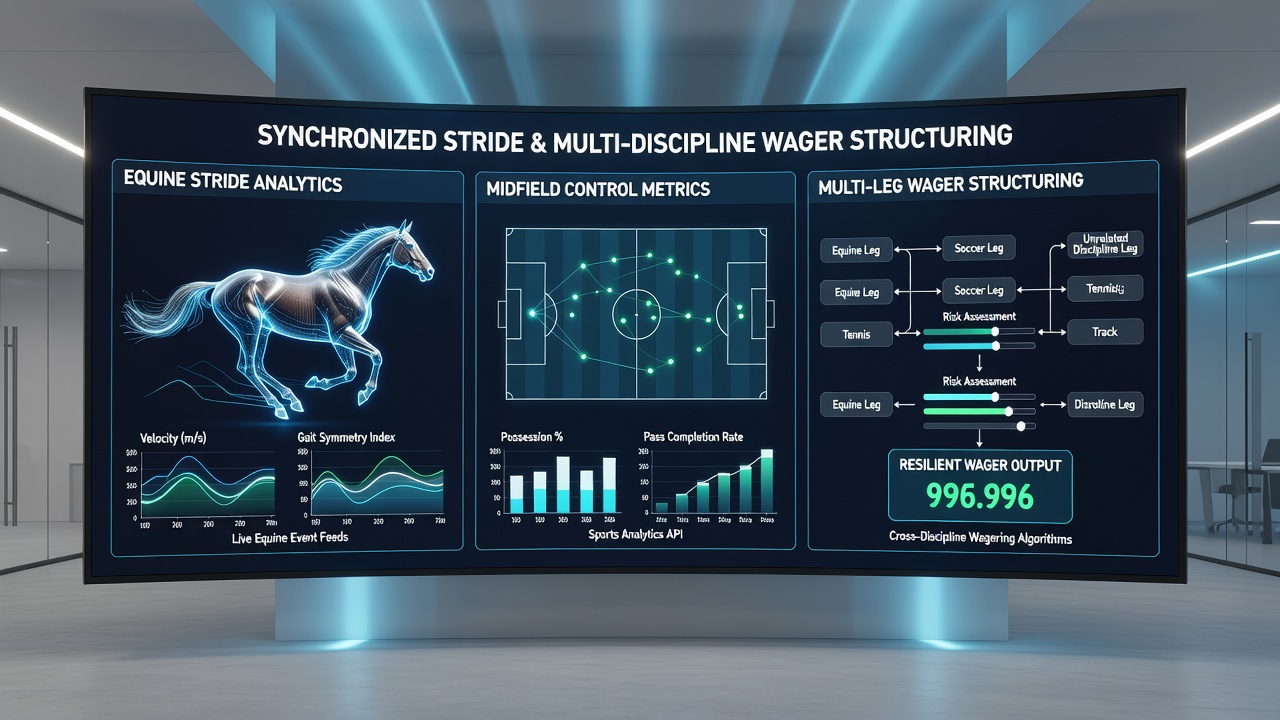
Aligning Equine Stride Metrics with Soccer Midfield Controls for Durable Accumulator Construction Across Sports
Data integration between equine stride analytics and soccer midfield control metrics has expanded in professional sports monitoring since early 2025, with systems now capturing real-time variables from both horse racing events and football matches to inform multi-leg wager structures. Researchers at institutions like the University of Melbourne have documented how stride length, frequency, and ground reaction forces from thoroughbreds combine with possession retention percentages and pass completion rates in midfield zones to create layered datasets that support accumulator construction across unrelated disciplines.
Core Data Streams in Equine and Soccer Environments
Equine events generate stride telemetry through wearable sensors that record variables such as stride duration, vertical displacement, and fatigue indicators during races, while soccer matches produce midfield control metrics via GPS trackers and optical systems that track player positioning, ball recovery rates, and territorial dominance. Observers note that these streams operate on different temporal scales yet share common statistical properties around consistency and variance, allowing analysts to align peaks in horse performance with periods of sustained midfield control in football fixtures.
Studies conducted through 2026 have shown that synchronization begins with timestamp matching, where race segments from events held in August 2026 correspond to match halves or specific game phases in soccer leagues operating on parallel schedules. This alignment reveals correlations between a horse maintaining stride efficiency in the final furlong and a midfield unit sustaining high pass accuracy under pressure, patterns that appear in aggregated performance logs from multiple venues.
Technical Synchronization Methods
Processing pipelines apply normalization techniques to convert stride frequency into comparable units with midfield control indices, often using rolling averages and deviation scores to identify stable segments. Software platforms employed by data providers merge these outputs through machine learning models trained on historical event pairs, producing unified indicators that flag potential resilience in combined outcomes. Those who have examined the outputs report that the resulting metrics highlight periods where equine endurance aligns with soccer possession stability, creating candidate sequences for multi-leg wagers spanning both disciplines.
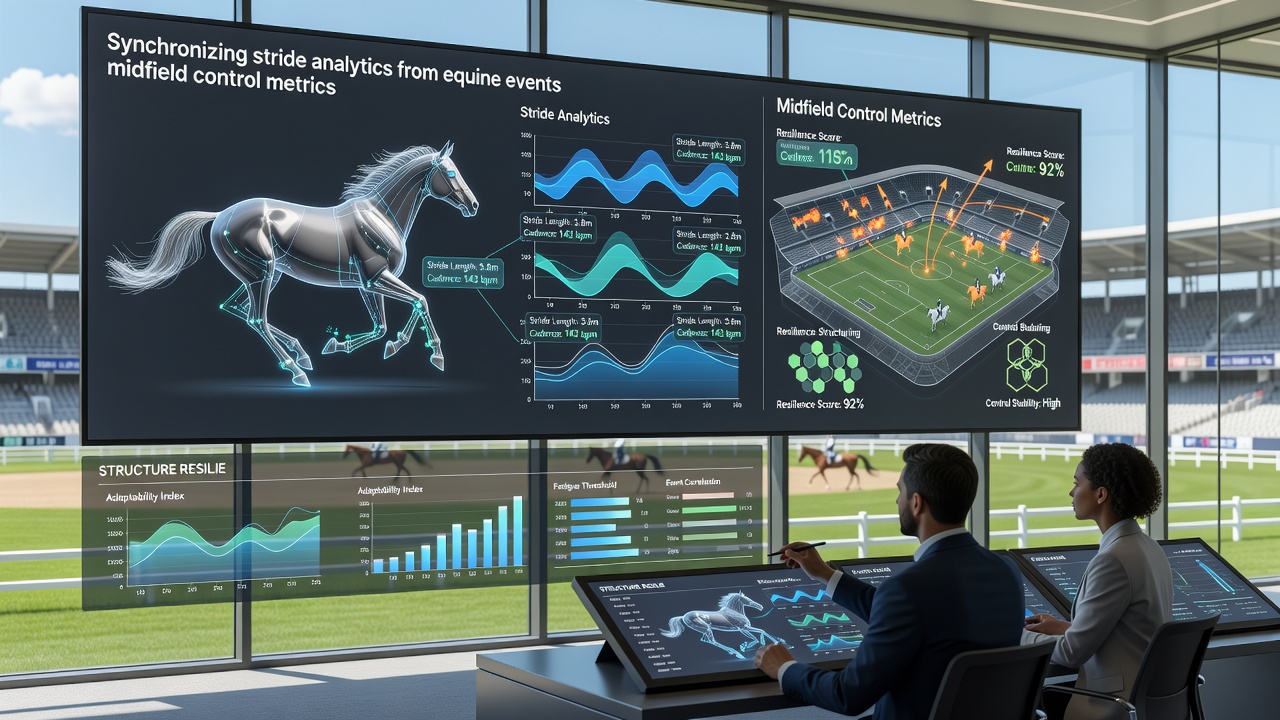
One documented case from August 2026 involved the integration of stride data from a major flat racing meeting with midfield statistics from concurrent European league matches, where researchers applied cross-correlation functions to isolate overlapping high-confidence intervals. The approach yielded structured sequences that accounted for independent variables such as track conditions and team formation changes, thereby supporting accumulator frameworks that distributed risk across the two sports without direct outcome linkage.
Application to Multi-Leg Wager Structures
Resilient multi-leg wagers benefit from these fused datasets because they permit selection of legs based on quantified stability rather than isolated event probabilities. Analysts construct sequences by sequencing equine legs during segments of consistent stride metrics with soccer legs during midfield control peaks, using conditional probability tables derived from the synchronized records. Figures from industry reports issued by the Canadian Gaming Association indicate that operators have incorporated similar cross-domain indicators into platform tools, enabling users to build accumulators that reference performance thresholds from both equine gait and football possession data.
Additional layers emerge when variance thresholds filter out unstable segments, leaving only those intervals where stride analytics and midfield metrics both exceed established benchmarks for the respective sport. This filtering process, applied to August 2026 event calendars, produced candidate accumulator paths that connected horse racing finishes with soccer match segments without requiring causal assumptions between the disciplines themselves.
Regulatory and Industry Context
International frameworks governing data usage in sports betting have addressed cross-discipline analytics through guidelines from bodies such as the Australian Communications and Media Authority, which published updates in mid-2026 on the handling of integrated performance telemetry. These documents emphasize transparency in metric derivation while noting that synchronized datasets must maintain separation between source events to comply with existing standards on outcome independence.
Academic papers from the Journal of Quantitative Analysis in Sports have further detailed validation protocols that test the robustness of fused indicators across unrelated event types, confirming that stride and midfield alignments retain predictive characteristics when applied to accumulator construction. The protocols include back-testing against archived results from multiple jurisdictions, ensuring the synchronization methods generalize beyond single-season observations.
Conclusion
Integration of equine stride analytics with soccer midfield control metrics continues to evolve through standardized data pipelines and validation frameworks that support multi-leg wager design across disciplines. Records from August 2026 demonstrate practical applications where aligned performance segments contribute to accumulator structures built on independent yet comparable stability measures. Ongoing work by research groups and industry associations maintains focus on methodological consistency, allowing the combined datasets to inform selections without introducing dependencies between the underlying sports.